
Kawagebo Snow Mountain Hotel - New Hotel in Yunnan, China
Kawagebo Snow Mountain Hotel – A Contemplative Sanctuary Beneath Tibet’s Sacred Peaks
A Front-Row Seat to the Sacred Kawagebo Mountain
Located in the Diqing Tibetan Autonomous Prefecture in northwestern Yunnan, Kawagebo Snow Mountain Hotel enjoys a spectacular position facing the revered Kawagebo Snow Mountain, one of Tibetan Buddhism’s most sacred peaks. Rising dramatically above the Lancang River Valley, the mountain has long been a place of pilgrimage and spiritual significance for local communities. The hotel occupies a prominent viewpoint along a popular tourist route that attracts visitors from across China. Yet despite its visibility, the project was envisioned as a refuge from the crowds and commercial activity that increasingly characterize the area. Here, the mountain is not simply a backdrop but a constant presence, shaping every aspect of the guest experience. From sunrise illuminating the snow-covered summit to the shifting shadows that sweep across the valley throughout the day, nature becomes the true protagonist of the stay.
A Hotel Designed as a Place of Reflection
Completed in 2026, Kawagebo Snow Mountain Hotel was designed by Shanghai-based Moguang Studio as a fully integrated architectural and interior project. Rather than creating a conventional mountain hotel, the designers sought to build a contemplative retreat that responds to both the physical and spiritual character of its surroundings. The challenge was significant. The site offered extraordinary mountain views but was constrained by a limited footprint, a strict height restriction and an increasingly developed tourist environment. Instead of competing with its surroundings, the architects chose to create an atmosphere of calm and inwardness. The concept draws inspiration from traditional Tibetan homes, monasteries and communal gathering spaces, translating their spatial qualities into a contemporary hospitality experience. Every design decision aims to encourage a slower rhythm, inviting guests to disconnect from external distractions and reconnect with the landscape.
Architecture Inspired by Tibetan Traditions
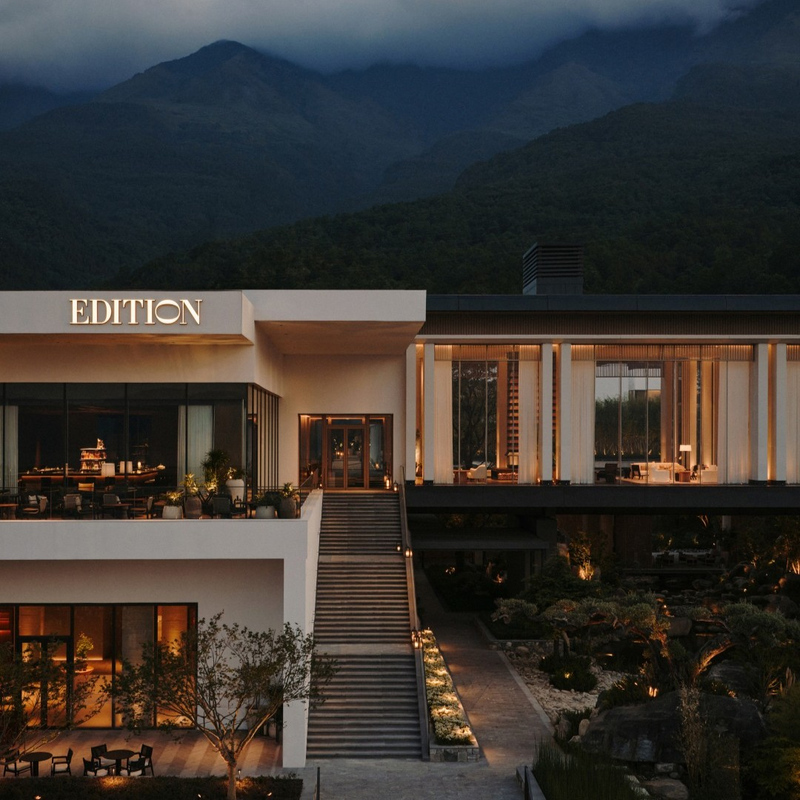
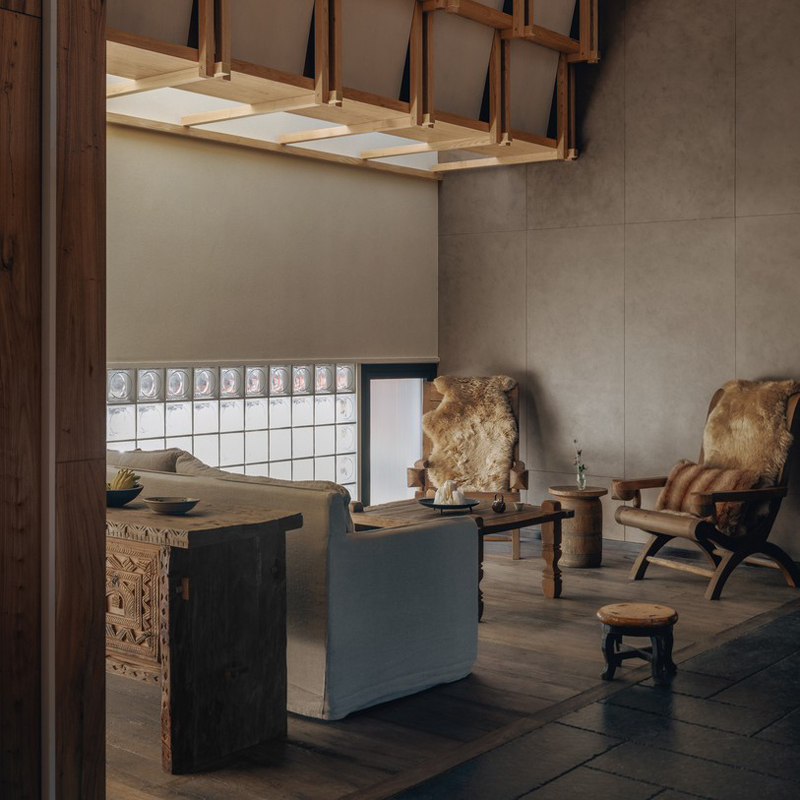
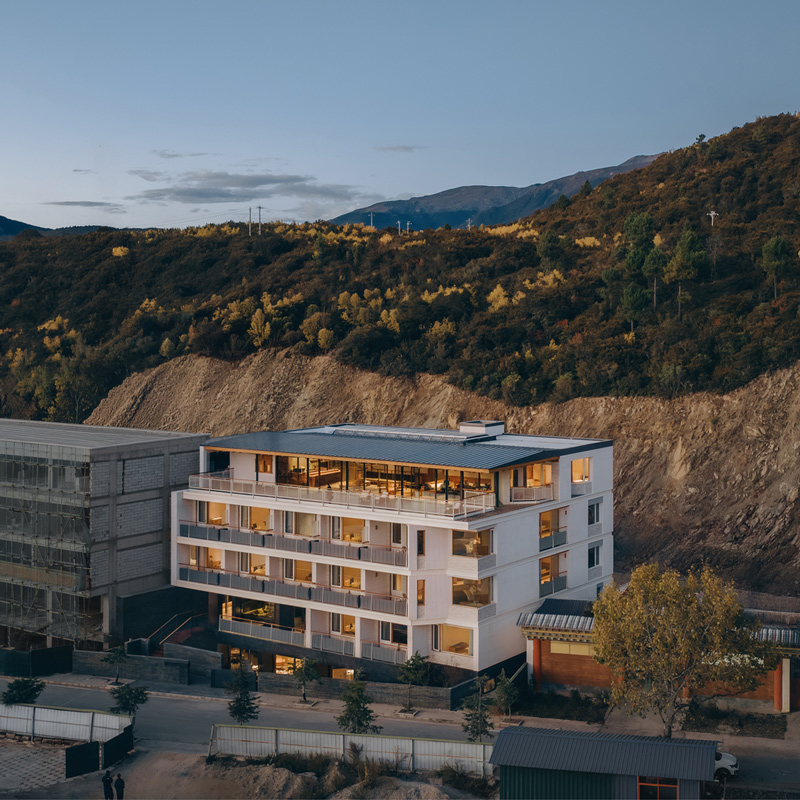
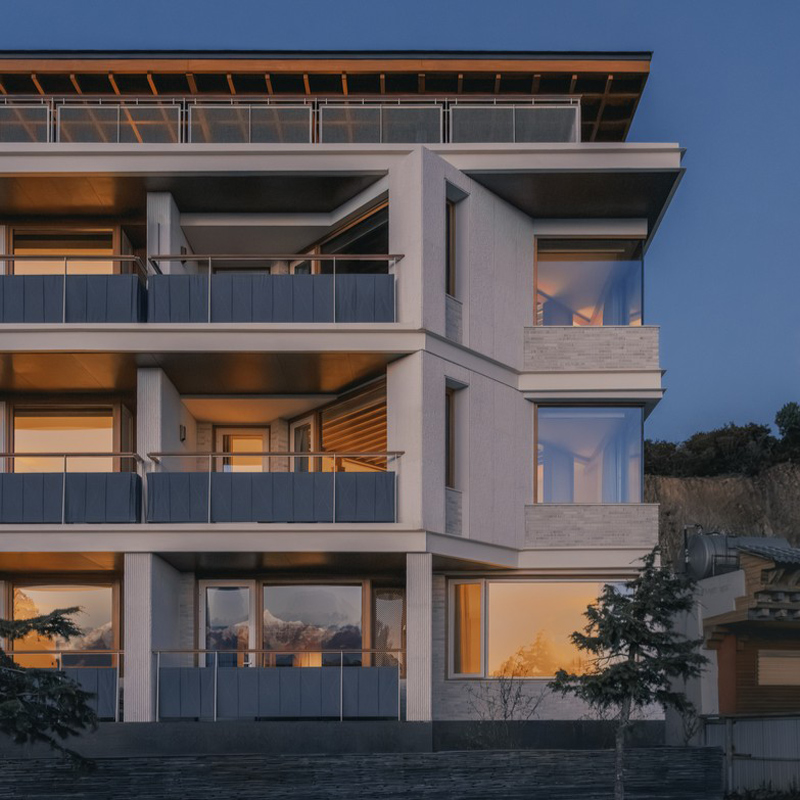
At first glance, the building appears as a simple white stone volume emerging from the mountainside. Yet behind this apparent simplicity lies a highly sophisticated architectural response. The exterior is clad in white sandstone panels whose hand-chiseled texture gives the façade a tactile and almost monolithic presence. Suspended gray textile screens soften the guestroom balconies while creating a rhythmic pattern across the elevations. The restrained architecture allows the surrounding scenery to remain dominant while establishing a quiet dialogue with the region’s traditional building techniques. One of the project’s defining features is its central atrium, conceived as the thermal and spiritual heart of the hotel. Inspired by the role of gathering spaces within Tibetan architecture, the atrium functions as a greenhouse-like core, collecting warmth during the day and gradually releasing it throughout the evening. Natural light filters through timber beams, wooden screens and geometric balustrades, creating an ever-changing interplay of shadow and texture. Throughout the building, beige acoustic wood-wool panels, white stone surfaces and handcrafted details establish what the architects describe as a “layered whiteness,” a subtle material palette that reinforces the atmosphere of serenity.
Guestrooms Inspired by the Rhythm of Tibetan Living
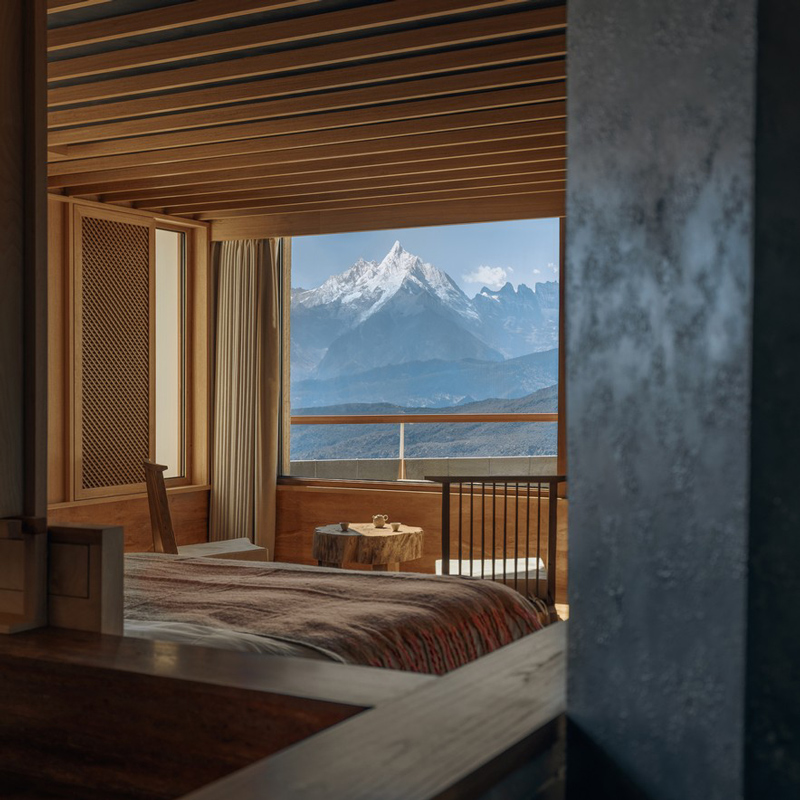
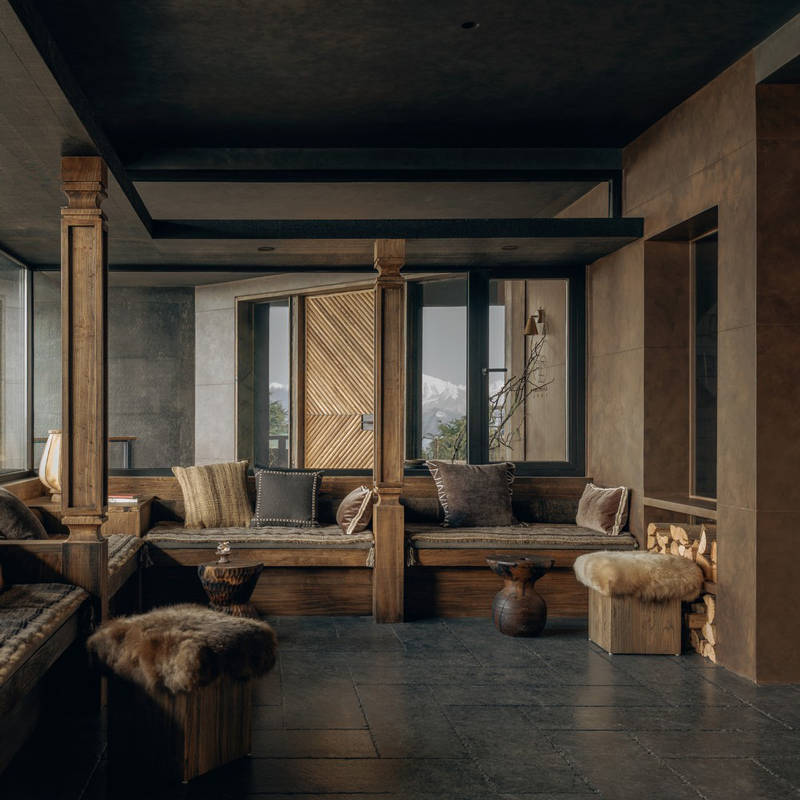
Each guestroom has been designed as a series of interconnected living spaces rather than a traditional hotel layout. The rooms unfold through carefully arranged zones inspired by everyday Tibetan domestic life. Guests move from entry vestibules into intimate seating areas centered around a stove, before discovering raised sleeping platforms, workspaces and freestanding bathtubs positioned beside deeply framed windows. Some accommodations even feature sculptural staircases leading to upper-level sleeping areas. Instead of maximizing openness, the design embraces intimacy. Timber screens, shelving units, curtains and half-height partitions create layers of privacy while maintaining visual continuity throughout the room. Thick window openings become places to sit, read and contemplate the landscape beyond. The color palette takes inspiration from the mineral pigments traditionally found in Tibetan Thangka paintings. Soft cream tones, natural timber, muted gray blues and occasional blue-green accents create an environment that feels both contemporary and deeply rooted in local culture. Wool blankets, handwoven textiles, linen bedding and yak leather details sourced from Tibetan pastoral communities further reinforce the connection to the region.
Dining Grounded in Place and Tradition
Located on the lower ground floor, the restaurant embraces the same architectural philosophy that defines the rest of the hotel. Rather than creating a formal dining room, the designers conceived a series of interconnected spaces organized around brick structures that function simultaneously as seating, partitions and architectural elements. Natural materials dominate the interior, with brick, timber, stone and woven textiles creating a warm and tactile atmosphere. Large openings frame views toward the courtyard and surrounding hillsides while carefully filtered daylight bathes the room in a soft glow. The dining experience celebrates the spirit of communal gathering, encouraging guests to linger over meals while remaining connected to the landscape. The restaurant becomes less a place to eat and more a continuation of the contemplative atmosphere that defines the entire property.
A Mountain Lounge Above the Clouds
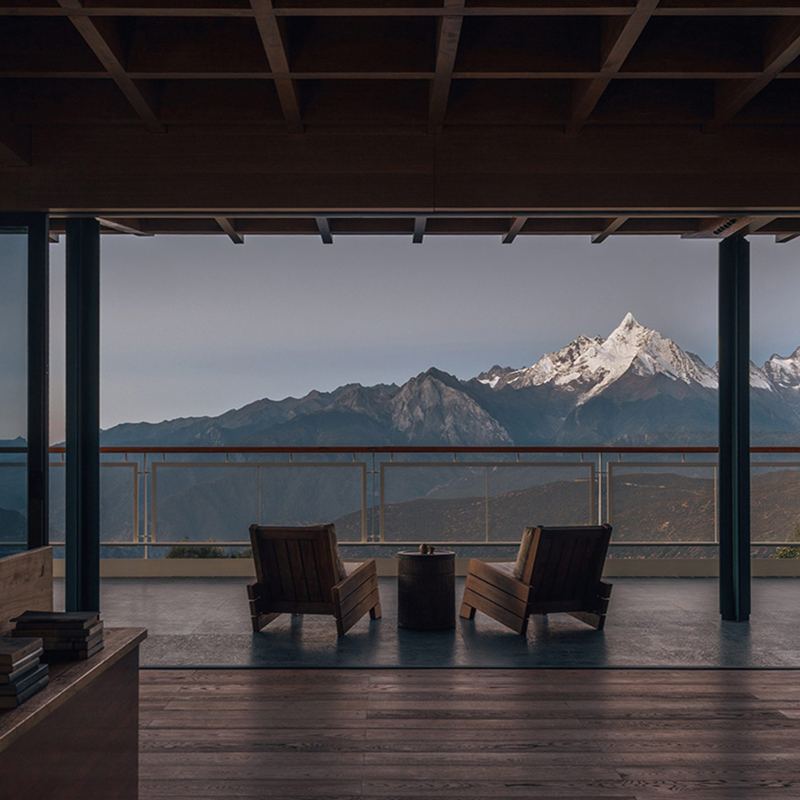
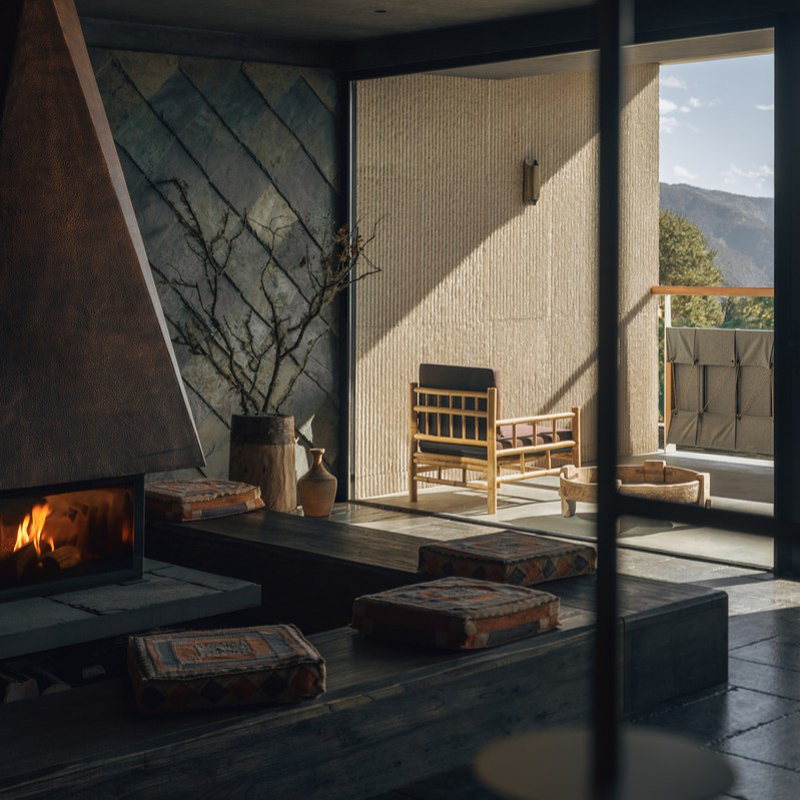
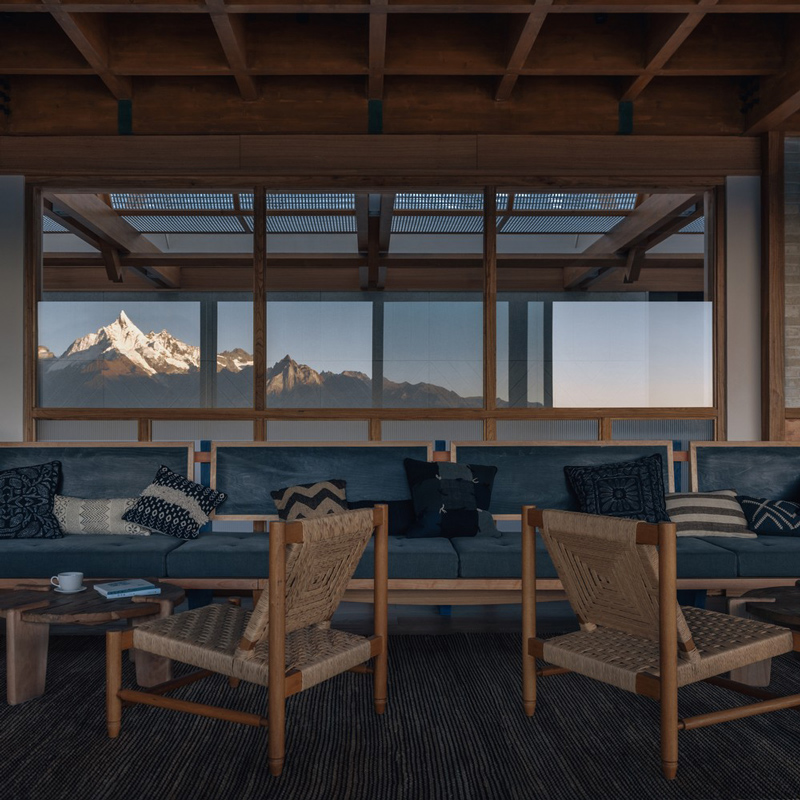
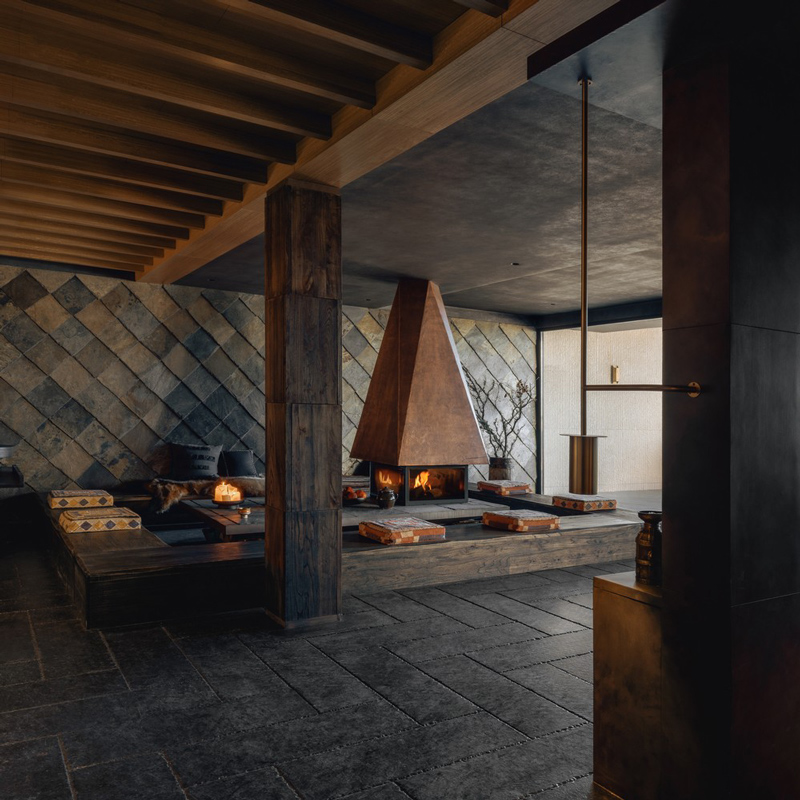
At the very top of the hotel, guests discover one of the property’s most extraordinary spaces: a panoramic café and viewing lounge suspended above the valley. Supported by an impressive steel-and-timber structure spanning more than 21 meters without internal columns, the space opens dramatically toward the snow-covered peaks of Kawagebo and the vast landscapes beyond. Floor-to-ceiling glazing maintains uninterrupted sightlines while allowing natural light to flood the interior. A central fireplace creates warmth and intimacy, encouraging guests to gather beneath the floating roof as clouds drift across the mountains. Whether enjoyed at sunrise, during afternoon tea or beneath a star-filled sky, the lounge offers a profound sense of connection to one of China’s most spectacular landscapes.
Where Architecture Becomes a Spiritual Experience
Kawagebo Snow Mountain Hotel is more than a destination hotel. It is an architectural meditation on place, culture and the relationship between humanity and nature. Through its restrained design, thoughtful use of materials and deep respect for Tibetan traditions, the project offers an experience that feels increasingly rare in modern hospitality. For travelers seeking something beyond luxury—a place of stillness, beauty and genuine emotional resonance—Kawagebo Snow Mountain Hotel represents one of the most compelling new openings in Asia.
We love Kawagebo Snow Mountain Hotel for:
– Opened in 2026 in Yunnan’s Diqing Tibetan Autonomous Prefecture facing the sacred Kawagebo Snow Mountain
– Contemporary mountain retreat designed by Shanghai-based Moguang Studio
– White sandstone architecture inspired by Tibetan homes, temples and textiles
– Guestrooms featuring Thangka-inspired colors, handwoven Tibetan textiles and panoramic mountain views
– Restaurant and communal spaces crafted from brick, timber, stone and locally inspired materials
– Spectacular rooftop café and viewing lounge overlooking the Lancang River Valley and Himalayan peaks
New Hotels Nearby
each an invitation to extend the experience.