
Burj Al Arab: The Reinvention of an Icon, Reimagined by Tristan Auer
A new era for Dubai’s most legendary address
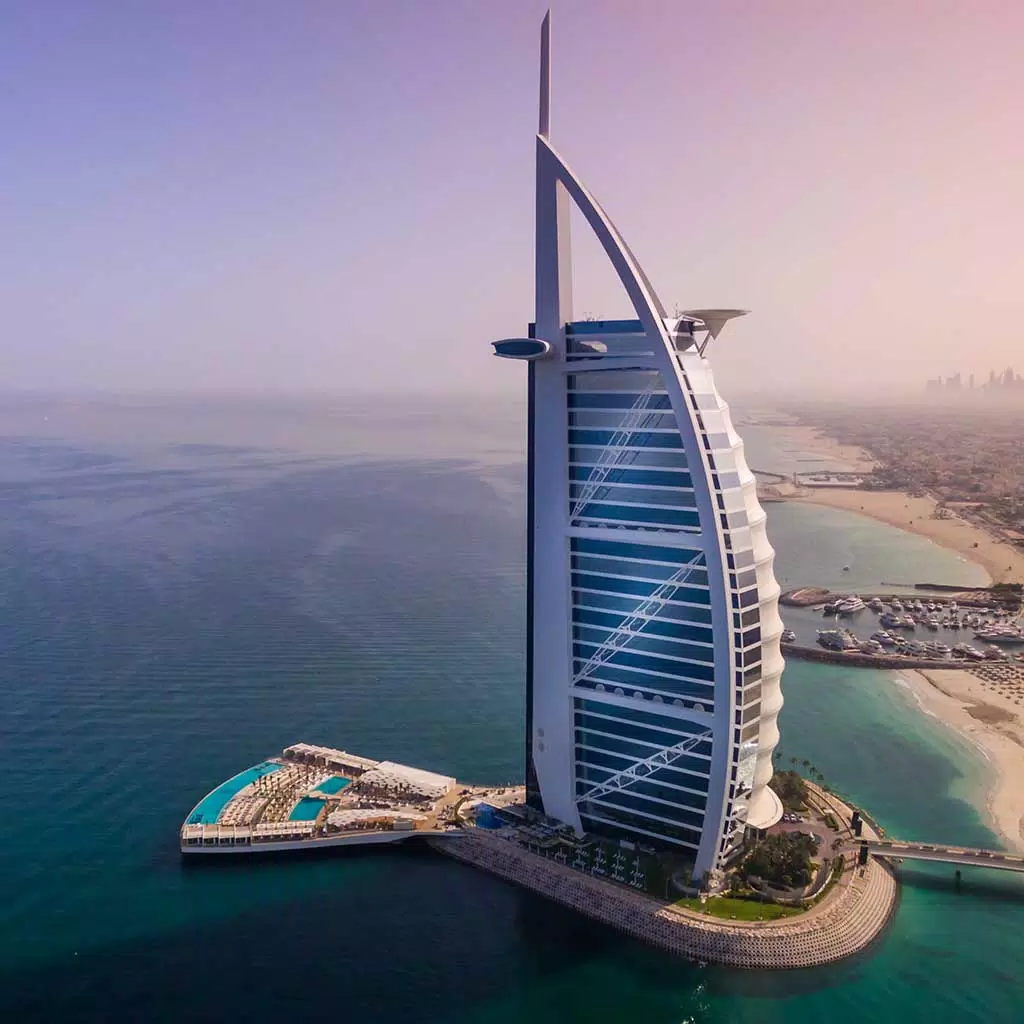
The Burj Al Arab is set to close for 18 months as it undergoes its first major restoration, entrusted to French interior architect Tristan Auer. More than a renovation, this project marks a rare moment of reflection for one of the world’s most iconic hotels, balancing preservation, legacy and a subtle redefinition of contemporary luxury.
An icon shaped by ambition and architectural theatre
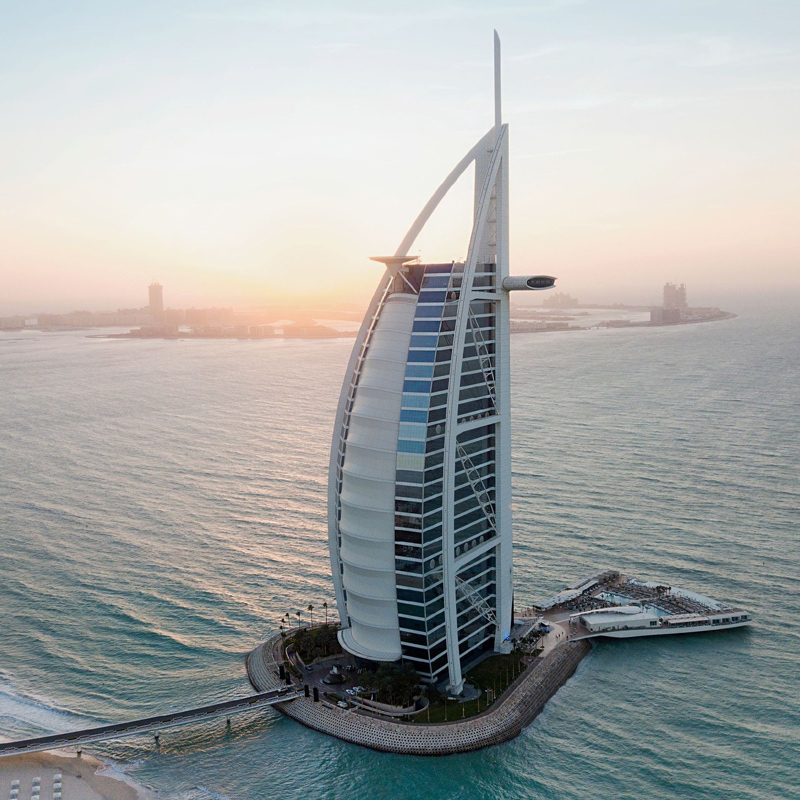
Rising like a sail on an artificial island off the coast of Dubai, the Burj Al Arab has, since its opening in 1999, embodied a radical vision of luxury hospitality in the UAE. Conceived as an architectural manifesto of modern ambition, it quickly became a global symbol of excess, aspiration and theatrical design. Often described as one of the most photographed luxury hotels in the world, it established a new visual language for ultra-luxury at the turn of the century. From its monumental atrium to its gold-detailed interiors and duplex suites suspended above the Arabian Gulf, every space was designed to impress and to assert Dubai’s emergence as a global capital of luxury tourism and architecture. Nearly three decades later, the landmark enters its first comprehensive restoration, not to redefine its identity, but to ensure its continuity in a rapidly evolving landscape of global luxury hospitality.
A carefully orchestrated 18-month closure
The 18-month closure of the Burj Al Arab is conceived as a deliberate act of preservation rather than interruption. Jumeirah frames the programme as a long-term investment in the longevity of one of its most symbolic assets, ensuring the property remains relevant for future generations without compromising its heritage. This is not a simple refurbishment but a conservation of legacy. Every intervention is expected to be precise, respectful and aligned with the hotel’s original architectural intent. The objective is not to erase what exists, but to refine and elevate it to meet contemporary expectations of ultra-luxury hospitality in Dubai, where experience now rivals aesthetics in importance. During this period, operations will be fully paused as the property undergoes a complete rethinking of its interiors, guest journey and spatial narrative.
Tristan Auer, the architect of restrained transformation
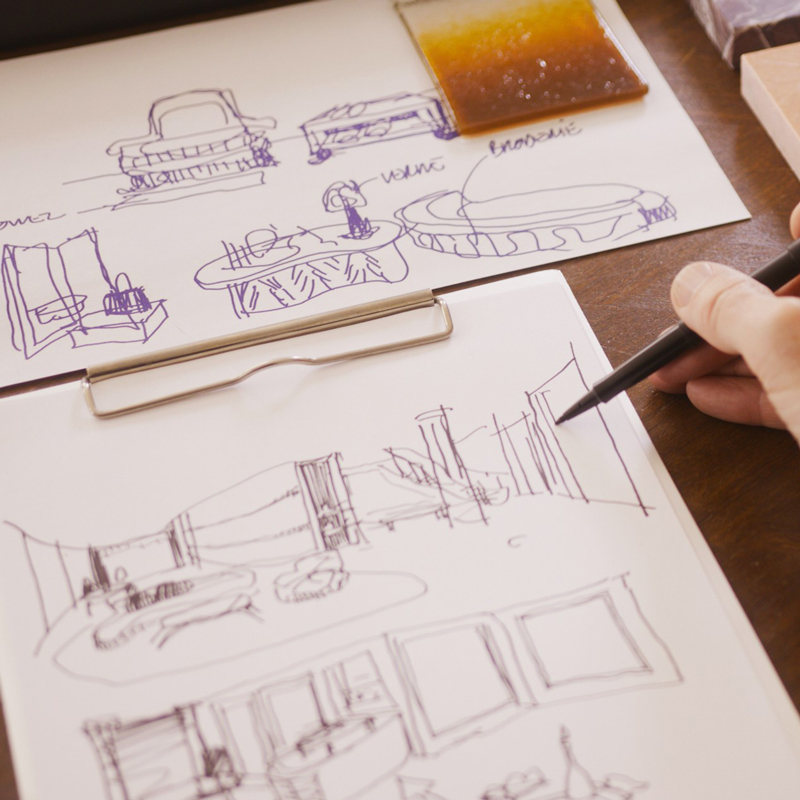
At the centre of this evolution is Tristan Auer, one of the most respected figures in contemporary interior architecture and luxury hotel design. Known for his work on culturally charged and iconic spaces, he approaches design through subtlety, emotional resonance and architectural restraint. His philosophy is rooted in heritage, craftsmanship and detail. Rather than imposing a new identity, he works in dialogue with existing structures, revealing rather than replacing, enhancing rather than erasing. In 2023, he received four distinctions at the AHEAD Europe Awards, including Hotel of the Year for his restoration of the Carlton Cannes. That project confirmed his ability to revive legendary hospitality icons without diluting their emotional memory, a sensibility now central to the Burj Al Arab renovation. For Auer, the commission is a rare privilege and responsibility: to carry forward the legacy of a global icon with precision, respect and sensitivity, rather than reinventing it.
Preserving identity while evolving perception
Thomas B. Meier, Chief Executive Officer of Jumeirah, describes the Burj Al Arab as more than an architectural achievement. It is a symbol of ambition, craftsmanship and enduring excellence, and a defining pillar of the group’s identity for nearly three decades. Within the landscape of luxury hotels in Dubai, it remains both a flagship and a cultural reference point in contemporary hospitality design. The restoration is therefore not about transformation for its own sake, but about safeguarding an icon whose significance extends far beyond hospitality. It reflects a broader strategy of preservation and reinterpretation, ensuring the hotel continues to embody the prestige of Jumeirah’s most iconic address.
From maximalism to emotional precision
Historically, the Burj Al Arab has embodied a very specific vision of luxury: bold, expressive and unapologetically opulent. It defined an era of early 2000s luxury hotel design in Dubai, where scale, gold and spectacle shaped prestige. The upcoming transformation signals a shift toward a more nuanced language in contemporary luxury hospitality design. Without abandoning its identity, the hotel is expected to embrace a softer, more tactile and emotionally driven experience. Luxury becomes less about accumulation and visual intensity, and more about atmosphere, rhythm and sensory depth. In this sense, Tristan Auer’s intervention aligns with a broader movement in high-end hospitality where restraint and clarity define modern sophistication.
An 18-month pause as part of the narrative
The closure itself becomes part of the story. In an industry defined by constant visibility and acceleration, such a pause is rare. Yet this suspension allows transformation at its highest level. The Burj Al Arab will not be experienced during this period, but its absence is intentional, creating space for reinvention without dilution and reflection without compromise.
Refining a global myth rather than rewriting it
The Burj Al Arab does not enter this restoration to become something new. It enters it to become more itself. Under Tristan Auer’s direction, this 18-month transformation is an act of refinement rather than reinvention, guided by respect for legacy and precision in execution. In a city defined by constant renewal, this project stands apart within Dubai’s luxury hotel landscape. It chooses patience over speed, nuance over excess and continuity over rupture. When it reopens, expected in 2027, the Burj Al Arab will remain instantly recognisable. Yet behind its iconic silhouette, a quieter, more contemporary and emotionally refined expression of luxury will have emerged—ensuring its relevance for decades to come, without ever diminishing its myth.
Article published on April 20, 2026